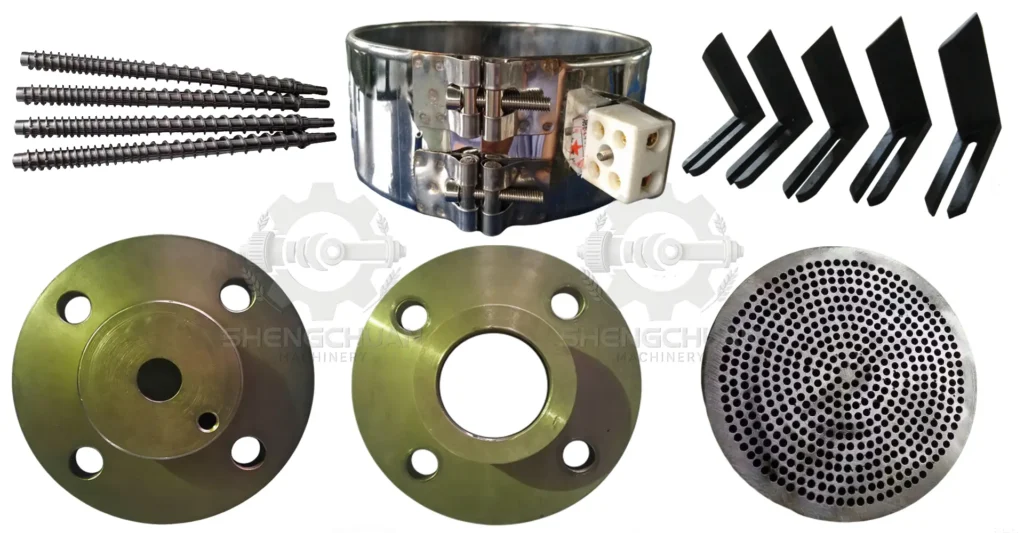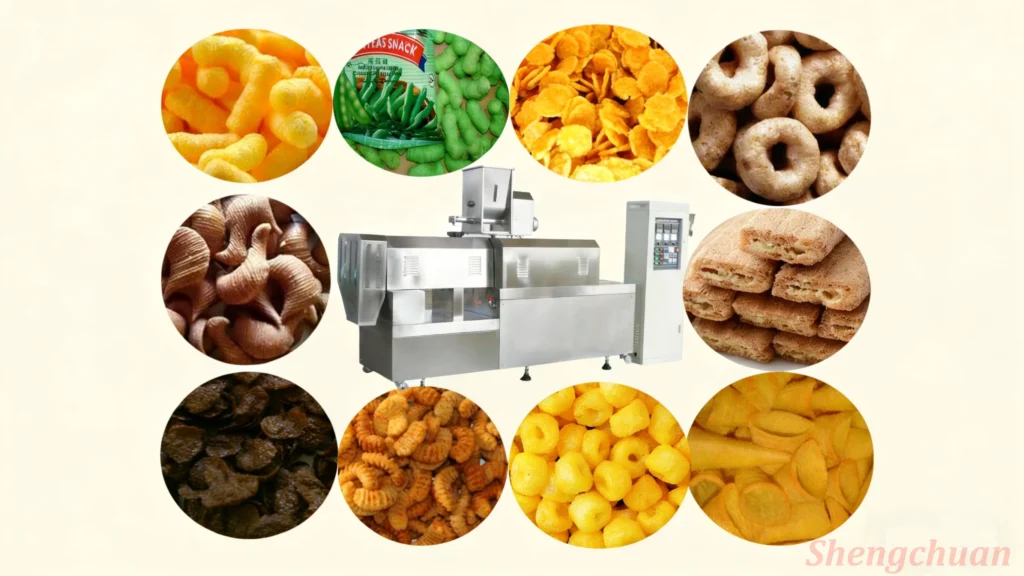
The working principle of a food extruder is thermomechanical processing under high temperature and high pressure: Materials enter the barrel from the hopper, are conveyed, compressed, and sheared by the rotating screw. Meanwhile, they are melted and plasticized through external heating and frictional heat generation. After being extruded through the die, the materials expand instantly due to sudden pressure drop, and then are formed by cutting or post-processing.
🔧 Two Main Types and Key Differences
表格
| Type | Core Structure | Conveying Principle | Mixing and Shearing | Application Scenarios |
|---|---|---|---|---|
| Single-Screw Extruder | 1 screw + heated barrel | Friction drag conveying, relying on the friction difference between materials and screw/barrel | Weak mixing, general uniformity of shearing and homogenization | Starch-based basic puffing (e.g., corn curls, puffed snacks), simple granular feed, basic pet food |
| Twin-Screw Extruder | 2 intermeshing screws + barrel | Positive displacement conveying, forced propulsion, high efficiency and stability | Strong shearing and repeated kneading in the meshing area, good mixing uniformity and self-cleaning | Complex formulas (e.g., high-protein, high-fiber, multi-component), pet food, aquatic feed, textured protein |
📝 Full Process Breakdown
- Feeding and Conveying: Materials enter the barrel from the hopper, and the rotating screw pushes the materials to move forward.
- Compression and Temperature Rise: The gradual change of screw pitch/screw groove and the resistance of the discharge die form high pressure; external heating (120–200℃) and shear friction increase the material temperature, leading to starch gelatinization and protein denaturation, forming a molten dough.
- Extrusion and Expansion: The molten material is extruded through the die hole with sudden pressure relief, and the internal water vapor boils and expands, with the volume reaching 3–8 times the original volume.
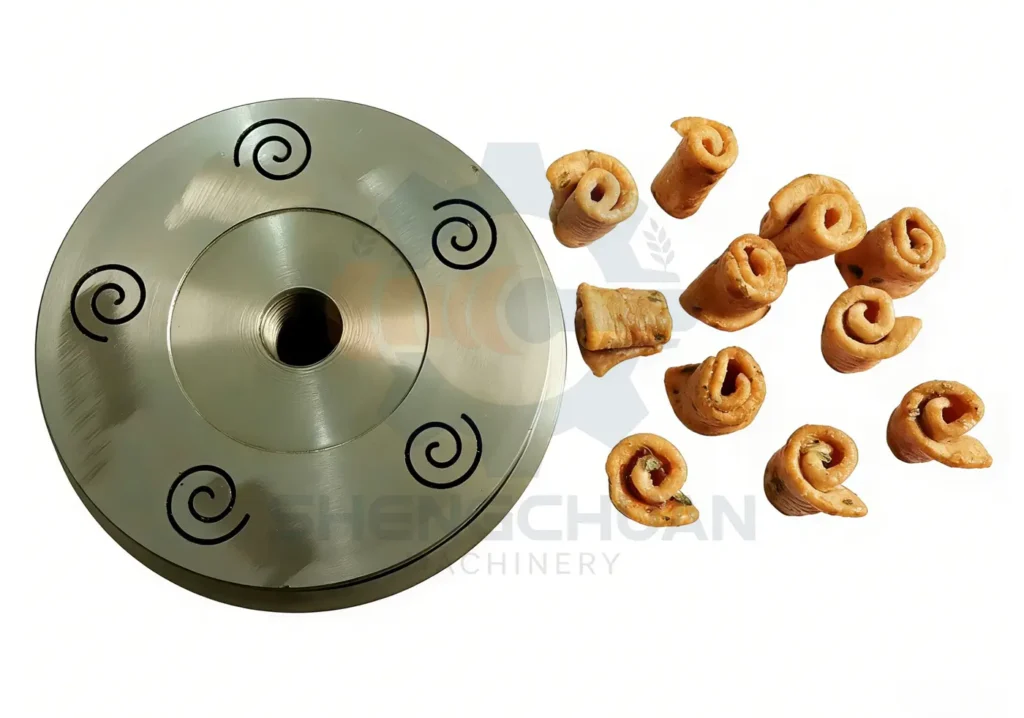
- Cutting and Forming: High-speed rotating knives cut the extrudate into particles, strips, slices and other shapes, and the die hole shape determines the product form.
- Post-Processing (Optional): Dry/cool to the specified moisture content, or spray seasoning and coating to improve taste and shelf life.
💡 Key Parameters and Influences
- Screw Speed: Increasing the speed can enhance shearing and production capacity, but the temperature must be controlled to avoid material degradation.
- Barrel Temperature: Precise segmented control (e.g., low temperature in the feeding section, high temperature in the melting section) to adapt to different materials and products.
- Raw Material Moisture: The moisture content of the feed is usually 13%–35%, which directly affects the expansion degree and product texture.
- Die Design: The hole diameter, number of holes, and length affect the pressure and expansion effect, which is the core of forming.