
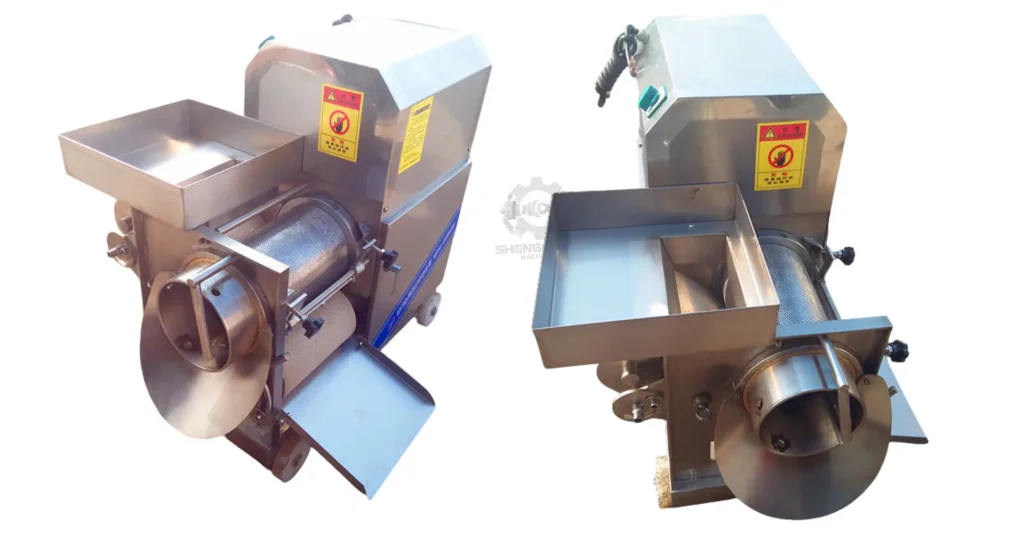
If you’re running a seafood processing business, your fish meat extractor is one of the most critical pieces of equipment—its performance directly impacts your production efficiency, meat yield, and product quality. A well-maintained fish meat extractor not only lasts longer (saving you replacement costs) but also ensures consistent, safe, and high-quality fish meat extraction. Whether you’re a small-scale processor or a large industrial plant, this comprehensive maintenance guide will help you keep your machine in top condition, avoid unexpected downtime, and maximize its service life.
In this blog, we’ll break down maintenance into easy-to-follow daily, weekly, monthly, and annual routines, cover wear part replacement standards, troubleshoot common issues, and share pro tips to boost performance. Let’s dive in!
1. Daily Maintenance: The Foundation of Equipment Longevity
Daily maintenance is non-negotiable—it prevents bacterial growth, avoids minor issues from escalating, and keeps your machine ready for the next shift. Perform these steps after each processing batch:
1.1 Thorough Cleaning & Sanitization
Food safety is paramount in seafood processing, so cleaning every food-contact part is critical. Follow these steps:
- First, turn off the power and unplug the machine—never clean or disassemble a running device.
- Disassemble all food-contact components: sieve drum, feed hopper, meat outlet, waste outlet, and rubber roller. Use a soft brush and food-grade neutral detergent to scrub away residual fish paste, fish bones, and blood.
- Rinse all parts with high-pressure water to clean hard-to-reach gaps, then sanitize with food-grade disinfectant (75% food-grade alcohol or sodium hypochlorite solution). Rinse again with clean water to remove any disinfectant residue.
- Dry all parts thoroughly with a clean cloth—moisture can cause rust and bacterial growth. Wipe down the machine’s exterior to remove oil stains and water marks.
1.2 Wear Part Inspection
Check key wear parts daily to catch damage early and avoid production delays:
- Sieve Drum: Inspect for holes, clogging, or deformation. Use a soft brush to clear blocked mesh holes; replace the sieve immediately if there are any tears (even small holes can reduce meat yield or let bones pass through).
- Rubber Roller/Conveyor Belt: Check for aging, cracks, or excessive wear. If the roller slips or the meat yield drops, adjust the tension or replace the roller/belt promptly.
1.3 Safety Check
- Inspect the power cord and plug for damage or leakage. Ensure the machine is properly grounded to prevent electrical hazards.
- Tighten any loose fasteners (screws, knobs) to avoid vibration during operation.
- Run the machine idle for 30 seconds to check for abnormal noise or jamming—if you hear squeaks, grinding, or rattling, stop the machine and investigate immediately.
2. Weekly Maintenance: Deep Clean & Lubrication
Weekly maintenance focuses on deep cleaning and lubrication to keep the machine’s internal components running smoothly. Set aside 30–60 minutes once a week for these tasks:
2.1 Deep Cleaning
- Disassemble the transmission mechanism (bearings, chains, gears) and clean away accumulated fish paste, oil, and debris—this prevents clogging and dry wear.
- Clean the machine’s base and wheels, and remove any standing water on the floor around the machine to prevent rust.
2.2 Lubrication
Proper lubrication reduces friction between moving parts and extends their lifespan. Only use food-grade lubricants (never industrial-grade lubricants, which can contaminate food):
- Apply food-grade lubricating oil or grease to bearings, chains, and gears.
- Check the lubricant level and refill if necessary. Wipe away any excess lubricant to avoid attracting dust and debris.
2.3 Structural Adjustment
- Check the sieve drum’s alignment—if it’s eccentric or wobbly, adjust it to ensure even extrusion pressure.
- Inspect the extrusion spring’s elasticity. If it’s fatigued or deformed, replace it to maintain stable meat extraction pressure.
3. Monthly Maintenance: Full Inspection & Rust Prevention
Monthly maintenance involves a more comprehensive check of the machine’s core components to catch potential issues before they cause downtime:
3.1 Full Equipment Inspection
- Disassemble the motor and reducer, clean internal gears and bearings, and replace degraded lubricant.
- Inspect electrical components (contactors, switches, wiring) for aging or looseness. Tighten terminal connections to prevent short circuits.
- Calibrate the machine’s pressure and speed to ensure consistent meat yield and quality.
3.2 Wear Part Stock Check
Keep spare wear parts on hand to avoid unexpected downtime. Check your inventory of sieves, rubber rollers, belts, and bearings, and replenish as needed.
3.3 Rust Prevention
- Polish stainless steel components to maintain their corrosion resistance.
- Apply anti-rust oil to non-stainless steel parts to prevent rust and degradation.
4. Annual Maintenance: Major Overhaul & Performance Calibration
Annual maintenance is a full machine overhaul to restore performance and extend its service life. We recommend scheduling this during a slow production period:
- Completely disassemble the machine and replace all aging seals, bearings, belts, and springs.
- Inspect the sieve drum for wear—if the mesh holes are deformed or the drum wall is worn down by more than 1/3, replace it.
- Test the motor’s insulation performance and operating current to ensure it meets safety standards.
- Calibrate meat yield, bone residue rate, and production capacity to ensure they meet the machine’s design specifications.
Long-Term Storage Maintenance (If Idle for Over 1 Month)
If you need to store the machine for an extended period, follow these steps to prevent damage:
- Clean, sanitize, and dry the entire machine thoroughly. Apply anti-rust oil to all parts.
- Disconnect the power and cover the machine with a dust-proof cover.
- Store the machine in a dry, well-ventilated, cool area—avoid humidity and high temperatures.
- Run the machine idle for 10 minutes once a month to prevent bearing seizure and motor moisture buildup.
5. Wear Part Replacement Standards & Cycles
Knowing when to replace wear parts is key to maintaining machine performance. Here’s a quick reference table:
Wear Part | Replacement Criteria | Recommended Replacement Cycle | Notes |
|---|---|---|---|
Sieve Drum | Clogged mesh (uncleanable), holes, deformed holes, or wall wear over 1/3 | 3–6 months (depending on usage frequency) | Use original specifications to ensure meat yield |
Rubber Roller/Conveyor Belt | Cracks, aging, excessive wear, slipping, or reduced meat yield | 6–12 months | Adjust tension after replacement |
Bearings | Abnormal noise, overheating, shaking, or oil leakage | 12 months | Fill with food-grade grease after replacement |
Drive Belt | Cracks, stretching, slipping, or abnormal noise | 6–12 months | Replace in pairs; do not mix old and new belts |
Extrusion Spring | Fatigue, insufficient pressure, or deformation | 12 months | Recalibrate extraction pressure after replacement |
6. Common Fault Troubleshooting (Maintenance-Related)
Even with regular maintenance, issues can arise. Here’s how to troubleshoot common problems:
Fault Phenomenon | Cause | Maintenance/Solution |
|---|---|---|
Low meat yield or meat with bones | Clogged sieve, worn rubber roller, or insufficient pressure | Clean the sieve, replace the rubber roller, adjust spring pressure |
Abnormal noise or vibration | Worn bearings, loose fasteners, or eccentric drum | Replace bearings, tighten screws, calibrate drum alignment |
Motor overheating or tripping | Overload, stuck bearings, or aging wiring | Reduce feed amount, lubricate bearings, inspect electrical wiring |
Poor meat discharge | Clogged sieve or residual fish paste in the outlet | Thoroughly clean the sieve and outlet; optimize raw material pre-treatment |
Machine rust | Incomplete cleaning or humid environment | Strengthen daily cleaning, apply anti-rust oil, improve workshop ventilation |
7. Pro Maintenance Tips for Maximum Performance
- Use only food-grade cleaners and lubricants to avoid food contamination—this is non-negotiable for food safety compliance.
- Always disconnect power before cleaning, disassembling, or maintaining the machine—safety first!
- Assign trained personnel to perform maintenance—untrained staff may damage core components.
- Keep a maintenance log to record maintenance dates, tasks performed, and parts replaced—this helps track the machine’s condition and plan future maintenance.
- Control raw material temperature: Fresh fish processed at 0–4℃ yields the best results; frozen fish must be fully thawed to avoid damaging the sieve with ice chips.
Final Thoughts
A well-maintained fish meat extractor is an investment in your business’s efficiency and profitability. By following this daily, weekly, monthly, and annual maintenance routine, you can extend your machine’s service life, reduce downtime, and ensure consistent, high-quality fish meat extraction. Remember—prevention is always better than repair, so don’t skip any maintenance steps!
If you have questions about specific parts, troubleshooting, or need recommendations for genuine spare parts, feel free to leave a comment below. Happy processing!